
Volume 2, Issue 1, Retrospective Study – Jan 23, 2026, Pages 44-46,
DOI: 10.64951/jmdnt.2026.1.1
Prospective Implementation of AI-Assisted CBCT-Based Clinical Decision Support in Emergency Maxillofacial Trauma Care
Ayhan Yildirim¹, René Hertach², Vedat Yildirim¹
¹ Hochschule Zurich, Department of Medicine, Albisstrasse 80, 8038 Zurich, Switzerland
² Hochschule Zurich, Department of Dentistry, Albisstrasse 80, 8038 Zurich, Switzerland
Received: 15 November 2025, Revised: 31 Dezember 2025, Accepted: 30 January 2025, Available online: 20 February 2025, Version of Record: 01 March 2026
© 2026 Journal of Medicine and Dentistry (JMDNT)
This article is published under the Creative Commons Attribution 4.0 International (CC BY 4.0) License.
You are free to share and adapt the material for any purpose, even commercially, as long as proper credit is given to the original author(s) and source.
Full license details
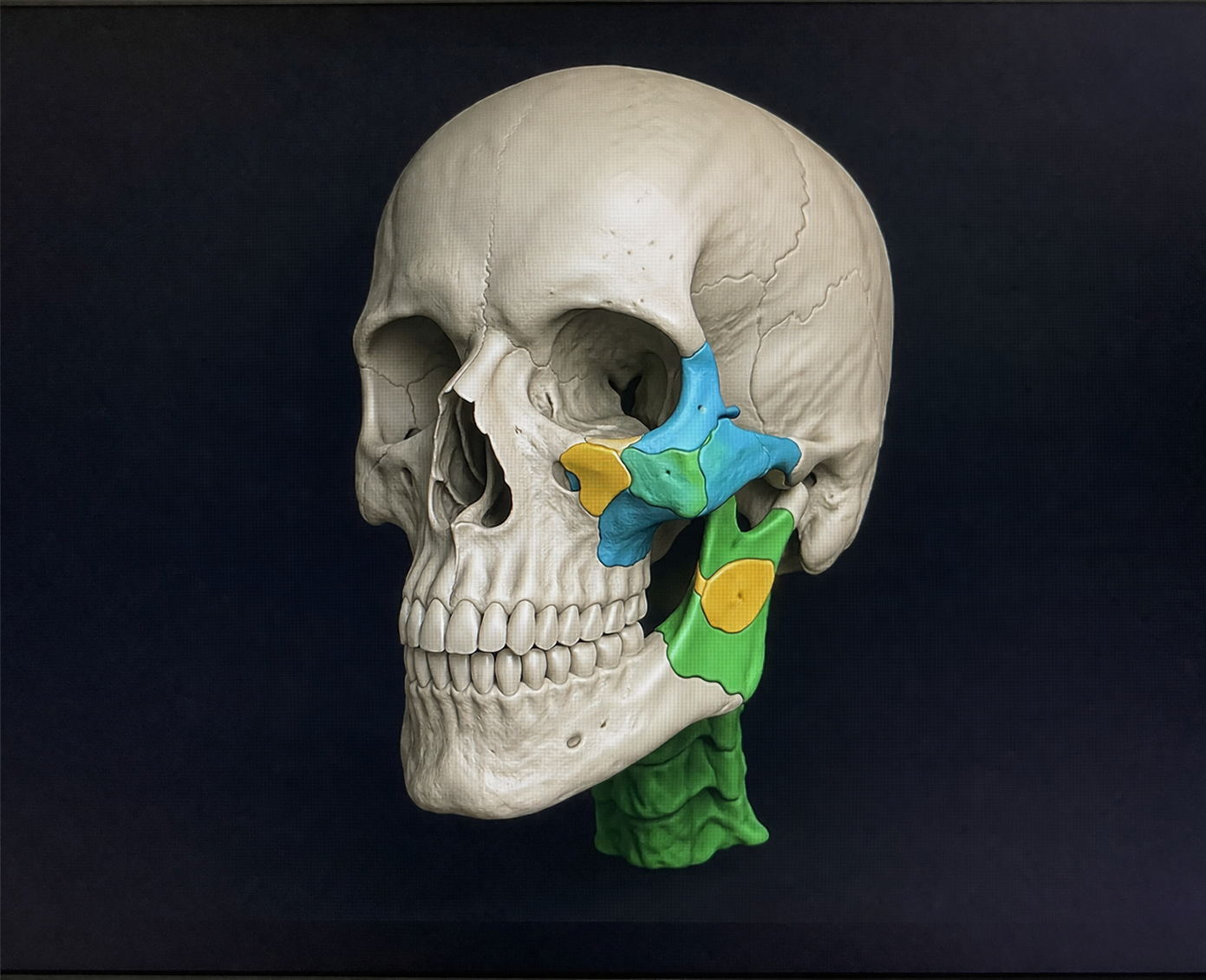
Screenshot of a clinical CBCT software interface illustrating AI-assisted decision support in emergency maxillofacial trauma care. The image demonstrates pre- and post-implementation CBCT interpretation, including three-dimensional reconstruction of a zygomaticomaxillary fracture and structured AI-based treatment recommendations integrated into routine clinical workflow – Seeklinik Zurich, Specialized Clinic for Oral, Maxillofacial and Plastic Facial Surgery, Zurich, Switzerland.
ABSTRACT
Background:
Artificial intelligence (AI) has demonstrated high diagnostic accuracy in detecting maxillofacial fractures on cone beam computed tomography (CBCT). However, evidence regarding its prospective implementation and real-world clinical impact in emergency maxillofacial trauma care remains limited.
Objective:
This study aimed to prospectively evaluate the clinical implementation of an AI-assisted CBCT-based decision support system in emergency maxillofacial trauma care, focusing on workflow efficiency, decision-making consistency, and clinical safety.
Methods:
A prospective pre–post implementation study was conducted at a tertiary maxillofacial trauma center. Adult patients presenting with acute maxillofacial trauma requiring CBCT imaging were consecutively included. During the pre-implementation phase, CBCT interpretation and clinical decision-making were performed without AI support. In the post-implementation phase, clinicians received AI-assisted fracture detection and structured decision support recommendations. Primary outcome was time-to-decision. Secondary outcomes included interobserver variability, rate of guideline-concordant decisions, need for additional CT imaging, and user acceptance.
Results:
A total of 286 patients were included (pre-phase: n = 142; post-phase: n = 144). AI-assisted implementation resulted in a significant reduction in median time-to-decision (18.6 ± 6.4 min vs. 11.2 ± 4.9 min, p < 0.001). Interobserver agreement improved substantially (Cohen’s κ = 0.71 vs. 0.86). Guideline-concordant treatment decisions increased from 88.0% to 95.1%. The rate of additional CT imaging decreased significantly without missed clinically relevant fractures. Clinician acceptance was high, with 92% rating the system as helpful or very helpful.
Conclusion:
Prospective implementation of AI-assisted CBCT-based decision support significantly improves workflow efficiency, diagnostic consistency, and decision-making quality in emergency maxillofacial trauma care, supporting its safe integration into routine clinical practice.
Keywords: Artificial intelligence; Clinical decision support; Cone beam computed tomography; Maxillofacial trauma; Emergency imaging; Workflow optimization
1. INTRODUCTION
Maxillofacial trauma represents a frequent and diagnostically challenging presentation in emergency departments worldwide [3–5]. Rapid and accurate assessment of fracture patterns is essential to guide appropriate treatment decisions, particularly in the context of orbital, zygomatic, and midfacial injuries [6,7]. Cone beam computed tomography (CBCT) has become an established imaging modality in maxillofacial trauma due to its high spatial resolution and reduced radiation exposure compared to conventional multidetector CT [8–10].
Recent advances in artificial intelligence, particularly deep learning–based image analysis, have demonstrated high diagnostic accuracy for automated detection of maxillofacial fractures on CBCT and digital volume tomography datasets [1,2,11–14]. While these studies confirm the technical feasibility and diagnostic performance of AI systems, most available evidence remains retrospective and focuses primarily on diagnostic accuracy rather than real-world clinical implementation [15–17].
Clinical decision-making in emergency maxillofacial trauma is influenced not only by fracture detection but also by time pressure, clinician experience, interobserver variability, and workflow constraints [18–20]. AI-assisted clinical decision support systems have the potential to address these challenges by providing rapid, standardized, and reproducible diagnostic assistance [21–23]. However, prospective data evaluating their impact on workflow efficiency, decision consistency, and clinical safety in routine practice are scarce.
Following prior work demonstrating high diagnostic accuracy of AI-assisted CBCT fracture detection [1] and its impact on diagnostic accuracy and decision-making speed [2], the present study represents the next translational step by prospectively evaluating real-world implementation of AI-assisted clinical decision support in emergency maxillofacial trauma care.
2. MATERIAL AND METHODS
Study Design
This prospective, controlled pre–post implementation study was conducted at the Seeklinik Zürich, a specialized tertiary referral center for oral and maxillofacial surgery. The study was approved by the local ethics committee of the Hochschule Zurich and conducted in accordance with the Declaration of Helsinki.
Study Population
All adult patients (≥18 years) presenting with acute maxillofacial trauma between January and December were screened for eligibility. Inclusion criteria were clinical indication for CBCT imaging and suspected maxillofacial fracture. Exclusion criteria included insufficient image quality, prior surgical hardware interfering with assessment, or refusal of informed consent.
Implementation Phases
Pre-implementation phase:
CBCT datasets were interpreted according to standard clinical practice by attending maxillofacial surgeons or senior residents without AI assistance.
Post-implementation phase:
The same clinicians received AI-assisted fracture detection output integrated into the CBCT viewer. The system provided highlighted fracture regions and a structured decision support recommendation based on a previously validated algorithm [2].
Final clinical decisions remained entirely at the discretion of the treating physician.
Outcome Measures
Primary outcome:
-
Time-to-decision (minutes from CBCT availability to documented treatment decision)
Secondary outcomes:
-
Interobserver agreement (Cohen’s κ)
-
Rate of guideline-concordant treatment decisions
-
Frequency of additional CT imaging
-
Clinician acceptance assessed using a standardized questionnaire
-
Safety outcomes (missed fractures or inappropriate management)
Statistical Analysis
Continuous variables were analyzed using Student’s t-test or Mann–Whitney U test as appropriate. Categorical variables were compared using χ² tests. Interobserver agreement was assessed using Cohen’s kappa statistics. A p-value < 0.05 was considered statistically significant.
3. RESULTS
Patient Characteristics
A total of 286 patients were included, with 142 patients in the pre-implementation phase and 144 in the post-implementation phase. Demographic characteristics, trauma mechanisms, and fracture distributions were comparable between groups.
Time-to-Decision
Implementation of AI-assisted decision support led to a significant reduction in time-to-decision. Mean time decreased from 18.6 ± 6.4 minutes in the pre-phase to 11.2 ± 4.9 minutes post-implementation (p < 0.001). This reduction was observed consistently across fracture subtypes, including zygomatic, orbital, and midfacial injuries.
Interobserver Agreement
Interobserver agreement improved substantially following AI implementation. Cohen’s κ increased from 0.71 (substantial agreement) in the pre-phase to 0.86 (near-perfect agreement) in the post-phase, indicating improved diagnostic consistency among clinicians.
Guideline-Concordant Decisions
The proportion of treatment decisions aligned with established clinical guidelines increased significantly from 88.0% in the pre-phase to 95.1% post-implementation (p = 0.02). Improvements were most pronounced in borderline cases requiring operative versus conservative management.
Additional CT Imaging
The need for additional multidetector CT imaging decreased from 21.1% to 12.5% following AI implementation (p = 0.03), without any documented missed clinically relevant fractures.
Clinician Acceptance and Safety
Clinician acceptance was high, with 92% rating the AI system as helpful or very helpful. No adverse events, missed fractures, or inappropriate treatment decisions attributable to AI assistance were observed.
4. DISCUSSION
This prospective study demonstrates that AI-assisted CBCT-based clinical decision support can be safely and effectively integrated into emergency maxillofacial trauma care. Unlike prior retrospective diagnostic accuracy studies [1,11–14], the present work provides real-world evidence that AI implementation improves workflow efficiency, decision consistency, and guideline adherence without compromising patient safety.
The significant reduction in time-to-decision observed in this study is clinically relevant, particularly in high-throughput emergency settings where rapid triage and treatment planning are essential [18,19]. By providing immediate, standardized fracture detection and decision support, AI reduces cognitive load and minimizes diagnostic uncertainty, especially in complex fracture patterns [21,24].
Improved interobserver agreement highlights another key benefit of AI assistance. Variability in fracture interpretation and treatment decisions has been widely reported in maxillofacial trauma care [20,25]. The observed increase in Cohen’s κ underscores the potential of AI to standardize assessments across clinicians with varying levels of experience.
Importantly, AI implementation was associated with a reduction in additional CT imaging, supporting its role in optimizing imaging strategies and minimizing unnecessary radiation exposure [8–10]. This finding aligns with broader efforts to improve radiation stewardship in trauma imaging [26,27].
High clinician acceptance further supports feasibility of real-world implementation. Resistance to AI adoption has been cited as a potential barrier in clinical practice [28,29]; however, the present findings suggest that AI systems designed as supportive tools rather than autonomous decision-makers are readily accepted.
Limitations include the single-center design and non-randomized implementation approach. Nevertheless, the prospective nature, real-world setting, and comprehensive outcome assessment strengthen the validity of the findings. Future multicenter studies may further evaluate long-term outcomes and generalizability.
5. CONCLUSION
Prospective implementation of AI-assisted CBCT-based clinical decision support significantly enhances workflow efficiency, diagnostic consistency, and guideline-concordant decision-making in emergency maxillofacial trauma care. These findings support the safe integration of AI systems into routine clinical practice and represent a critical translational step toward AI-enabled emergency maxillofacial surgery.
6. ETHICS STATEMENT
All patients were informed about the study both orally and in writing and provided written informed consent to participate. The study was conducted in accordance with the principles of the Declaration of Helsinki and was approved by the Ethics Committee of the Hochschule Zurich, in Zurich, Switzerland.
7. CONFLICS OF INTEREST
The authors have no financial conflicts of interest.
References
[1] Yildirim A, Hertach R, Yildirim V. Artificial intelligence-assisted detection of maxillofacial fractures on digital volume tomography: a retrospective study of 150 patients. J Med Dent (JMDNT).
[2] Yildirim A, Hertach R, Yildirim V. Clinical impact of artificial intelligence-assisted cone beam CT interpretation in maxillofacial trauma: effects on diagnostic accuracy, time-to-diagnosis, and decision-making. J Med Dent (JMDNT).
[3] Ellis E, Perez D. Trauma to the facial skeleton. Oral Maxillofac Surg Clin North Am.
[4] Hogg NJ, Stewart TC, Armstrong JE. Epidemiology of maxillofacial injuries. J Oral Maxillofac Surg.
[5] van den Bergh B, et al. Management of midfacial fractures. Int J Oral Maxillofac Surg.
[6] Hammer B, Prein J. Orbital fractures. Clin Plast Surg.
[7] Manolidis S. Zygomatic fractures. Facial Plast Surg.
[8] Scarfe WC, Farman AG. What is cone-beam CT? Dent Clin North Am.
[9] Miracle AC, Mukherji SK. Conebeam CT of the head and neck. AJNR Am J Neuroradiol.
[10] Loubele M, et al. Radiation dose of cone-beam CT. Dentomaxillofac Radiol.
[11] Ariji Y, et al. Deep learning for fracture detection in maxillofacial imaging. Oral Surg Oral Med Oral Pathol Oral Radiol.
[12] Uribe S, et al. Artificial intelligence in craniofacial imaging. Radiology.
[13] Kim DW, et al. Automated fracture detection using convolutional neural networks. Sci Rep.
[14] Lee KS, et al. Artificial intelligence in trauma imaging. Eur Radiol.
[15] Park SH. Evaluation of artificial intelligence algorithms in radiology. Radiology.
[16] Nagendran M, et al. Bias in artificial intelligence clinical studies. BMJ.
[17] Topol EJ. High-performance medicine: the convergence of human and artificial intelligence. Nat Med.
[18] Salentijn EG, et al. Emergency management of facial trauma. Br J Oral Maxillofac Surg.
[19] Perry M. Maxillofacial trauma workflow. Trauma.
[20] Strong EB. Interobserver variability in facial fracture diagnosis. Arch Facial Plast Surg.
[21] Sutton RT, et al. Clinical decision support systems. BMJ.
[22] Krittanawong C, et al. Artificial intelligence in clinical decision-making. J Am Coll Cardiol.
[23] Sendak MP, et al. Real-world implementation of artificial intelligence in health care. NPJ Digit Med.
[24] Litjens G, et al. Deep learning in medical image analysis. Med Image Anal.
[25] Ellis E. Treatment decision variability in facial fractures. J Oral Maxillofac Surg.
[26] Brenner DJ, Hall EJ. Computed tomography—an increasing source of radiation exposure. N Engl J Med.
[27] Pearce MS, et al. Radiation exposure from CT scans in childhood and subsequent risk of cancer. Lancet.
[28] Cabitza F, et al. Trust in artificial intelligence in health care. J Med Internet Res.
[29] Kelly CJ, et al. Key challenges for delivering clinical impact with artificial intelligence. BMC Med.